What to do about noisy neighbors.
Talk to them first. Then change what you can in your room, and cover what still gets through with steady sound, from a speaker or in sleep headphones, so the next thud doesn't wake you.
Lissa arriva presto.
Iscriviti alla lista d’attesa e scopri come avere Lissa Premium gratis al lancio.
Indossa le cuffie.
7 giorni gratis. Annulla quando vuoi.


Start with the neighbor
Most noisy neighbors don't know how much you hear. Walking in socks on a hard floor sounds quiet from above, and a speaker standing on the floor sends its bass straight into the room below.
Knock at a calm time, like a weekend afternoon, not at 1am while it's happening. Say what you hear and when: "I can hear footsteps from about midnight, and my bedroom is right under your living room." Then ask for one thing:
- a rug, or slippers after 11pm
- the speaker on a shelf or a stand, away from the shared wall
- the washing machine or the vacuum before a set time
If you'd rather not knock, leave a short, friendly note with your name and apartment number. Skip the broom on the ceiling. It makes the next conversation harder.
If it keeps happening
Keep a log: the date, the time, what you heard and how long it lasted. Record a few seconds on your phone while it's happening. A landlord or a mediator will ask for both.
- Read your lease. Many set quiet hours, and some require rugs over most of the floor, which gives you something specific to point to.
- Ask the other neighbors. If the people next door hear it too, a complaint from several apartments carries more weight.
- Write to the landlord, the property manager or the HOA. Attach the log.
- Try mediation. Many cities and counties run free community mediation for disputes between neighbors.
- Check your local rules. Noise ordinances and quiet hours vary by city. For a loud party in the middle of the night, call your city's non-emergency line or 311, not 911.
Walking, talking and doors closing usually count as normal living, even late at night. When that's the noise and the walls are thin, the fix is on your side of the wall.
Fix what you can in the room
You can't change their floor from below, but changes on your side help with voices, the TV and the street.
- Move the bed. Get it away from the shared wall, and out from under their hallway or living room if the layout allows.
- Put mass on the shared wall. A full bookcase, a wardrobe or a heavy headboard blocks more than a bare wall.
- Seal the gaps. A door sweep and weatherstripping on the bedroom door cut hallway voices. For street noise, seal the window and hang heavy curtains.
- Add soft surfaces. A rug and curtains cut the echo in your room, so what comes through sounds less sharp.
Footsteps and bass travel through the building's structure, so foam panels on your ceiling won't stop them. Soundproofing a ceiling is construction work, which renters usually can't do.
Cover the rest with steady sound
You can do this tonight. In a silent room, a thud is a sudden jump in sound, and the jump is what wakes you. Play a steady sound and the same thud is a smaller change, easier to sleep through.
Match the sound to the noise:
| What you hear | What covers it best |
|---|---|
| Voices, the TV, a dog | Brighter noise, like white or pink, which covers the range voices sit in |
| Footsteps, doors, traffic | Deeper noise, like brown, or the steady hum of a fan |
| Bass and music through the wall | The lowest rumble you can find, since a high hiss does nothing for bass |
Set it just loud enough for the noise to blend in. You'll be listening for hours, and quieter is easier on your ears.
Leave it on all night. The footsteps often start again at 1am, after a 30-minute sleep timer has stopped, and in the silence that follows, the next one stands out more.
Earplugs, sleep headphones or noise cancelling?
| Foam earplugs | Noise-cancelling headphones | Sleep headphones with steady sound | |
|---|---|---|---|
| What it does | Blocks sound from reaching your ear | Cancels steady sound electronically | Adds a steady sound so the noise stands out less |
| Best for | Voices, the TV, higher sounds | Steady hums: traffic, an air conditioner, a fridge | Footsteps, doors, voices, the sudden sounds that wake you |
| Weaker on | Low bass, and some people can't sleep with them in | Sudden sounds like a thud or a slammed door, and over-ear pairs are hard to lie on | Bass you feel through the floor |
Noise masking vs noise cancelling. Noise cancelling plays an opposite sound wave to cancel a noise. It works best on steady sound and less well on a sudden thud. Masking leaves the noise there and plays a steady sound over it, so the noise stands out less. The noise that wakes you from a neighbor is usually sudden, so masking does more.
If earplugs don't work for you, try sleep headphones: thin speakers in a soft headband, or flat earbuds made for side sleepers. Some people wear foam earplugs under the headband as well.
How Lissa covers the noise
Footsteps overhead. Top Floor is a heater fan's steady hum, the fan so many people already sleep with, over a slow Delta beat. Leave it running and the steps upstairs blend into it.
Bass through the wall. Thick Walls is a low, muffled rumble over a slow Delta beat, deep enough that the bass you hear from next door sinks into it.
Voices, the TV, the street. Mix white, pink, brown and grey noise yourself, each on its own fader, until the noise you hear blends in. Add ambient sounds or music if you'd like something to listen to.
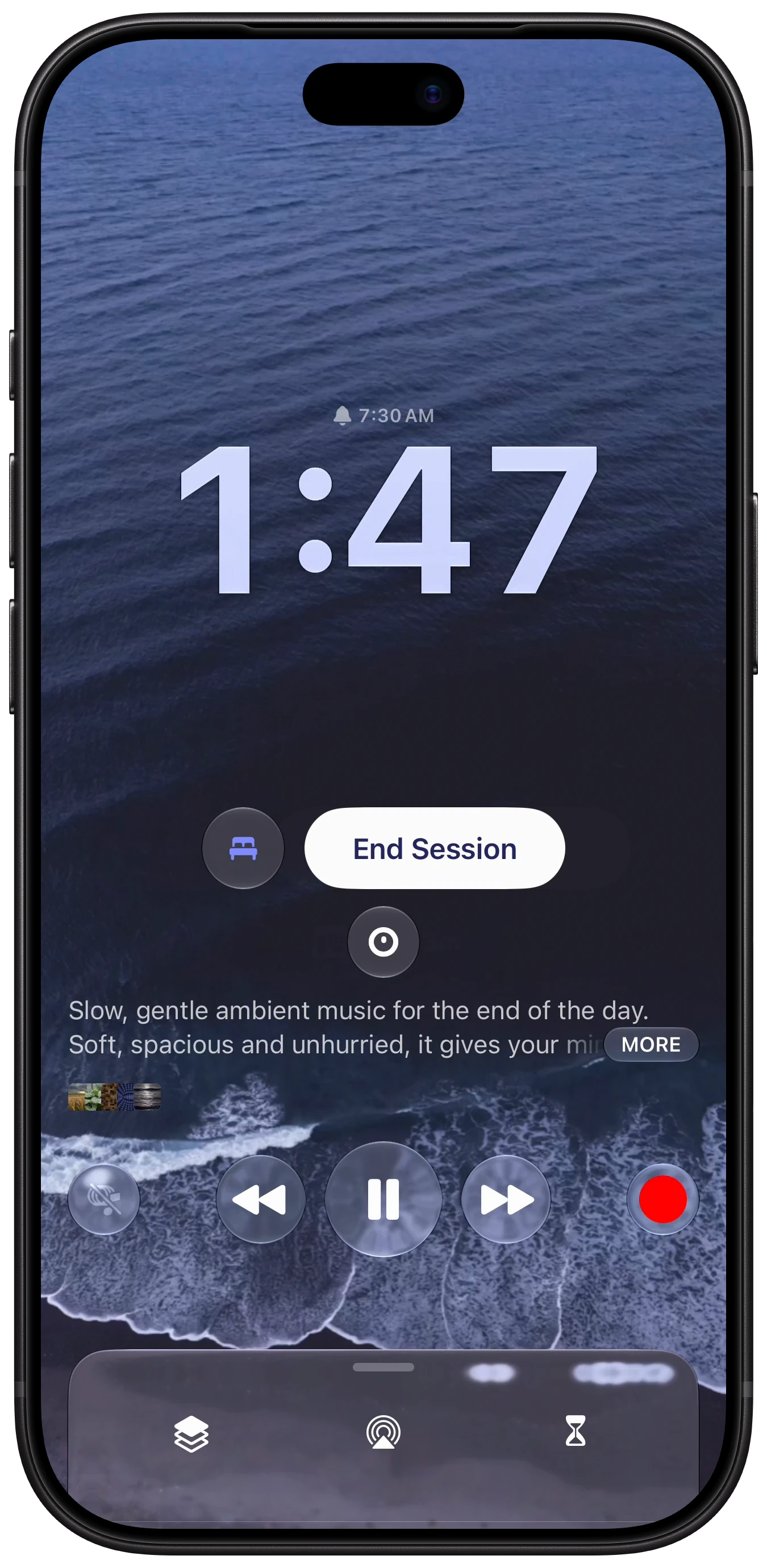
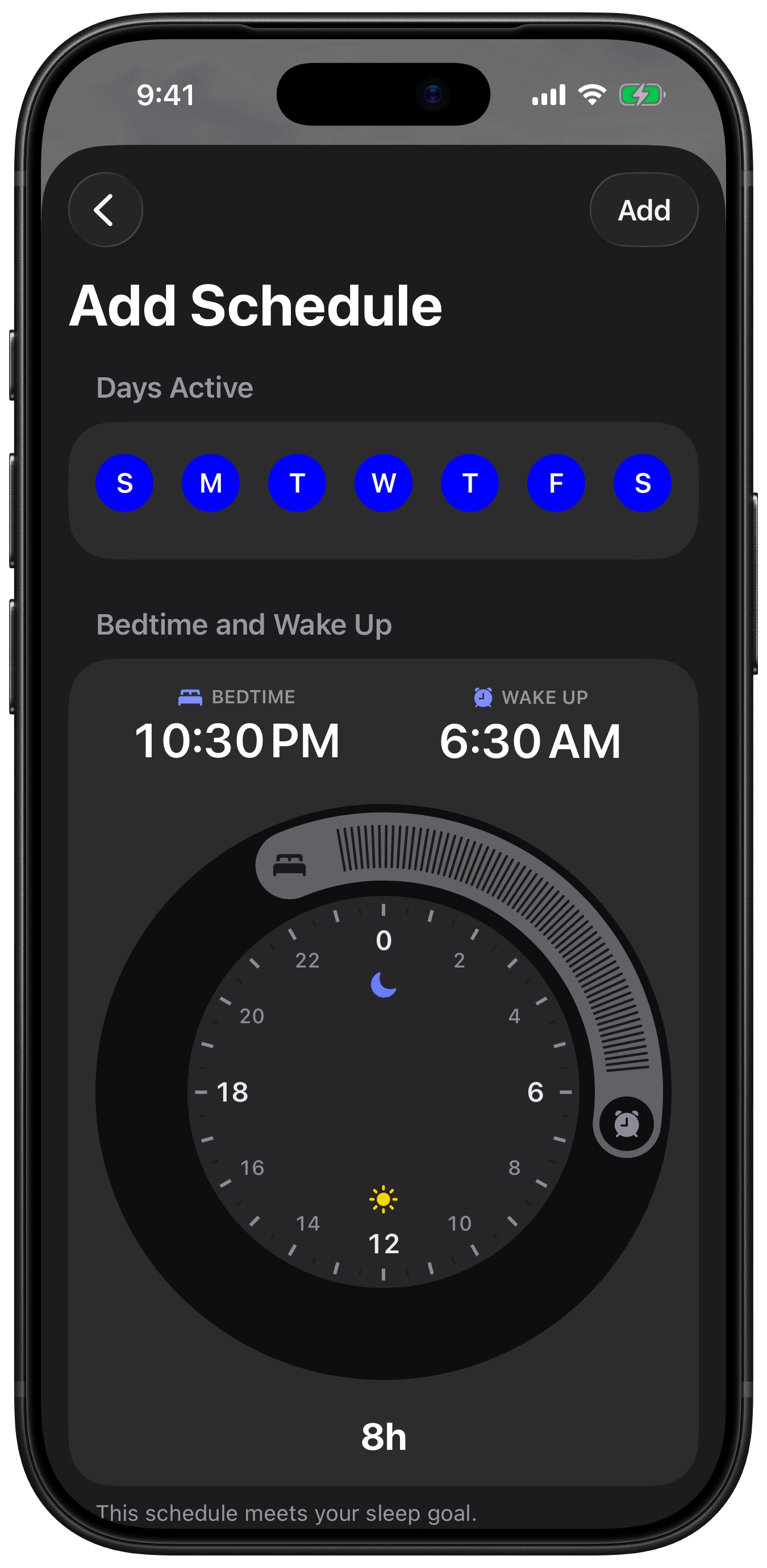
All night, then a gentle alarm. Your sound plays from bedtime to a gentle Wake Alarm that rings even on silent, so it's still playing at 1am when the footsteps start again.
Easy on your ears. Lissa shows how much listening your ears have had this week, so you know when to turn it down.
Cosa dicono i nostri beta tester.
JonathanBeta tester “Lissa ha fatto davvero la differenza nel mio tempo di concentrazione. I paesaggi sonori sono bellissimi e mi aiutano a entrare subito nel ritmo, ed è facile aggiungere anche la mia musica. Bloccare le app che mi distraggono mi tiene sul pezzo, e i promemoria per le pause mi evitano di esaurirmi nelle sessioni lunghe. Lo consiglio davvero.”
WilliamBeta tester “Ottimo lavoro con questo strumento fantastico, aiuterà tantissime persone.”
PhillipBeta tester “L’idea di ‘costruire un paesaggio sonoro’ per entrare in un certo stato d’animo è incredibile.”
JamesBeta tester “Ho adorato poter modulare, cambiare le frequenze (è magico), le forme e così via.”
Lissa arriva presto.
Iscriviti alla lista d’attesa e scopri come avere Lissa Premium gratis al lancio.
Indossa le cuffie.
7 giorni gratis. Annulla quando vuoi.
Fewer wake-ups under steady noise
In a sleep lab, steady white noise cut the wake-ups caused by loud, irregular noise from 48 an hour to 16. In a small pilot study, low-level pink noise reduced how much traffic noise broke up people's sleep. And in a survey of 3,509 Danish adults living in flats, people very annoyed by their neighbors' noise had 2.62 times the odds of being very bothered by sleep problems.

Before you start.
What can I do about noisy neighbors?
Talk to them at a calm time and ask for one specific change. If it keeps happening, keep a log, read your lease and write to the landlord or HOA. Meanwhile, move the bed away from the shared wall and play steady sound in sleep headphones at night, so you can sleep while it gets sorted out.
What counts as unreasonable noise?
It depends on where you live. Most cities set overnight quiet hours and limits on loud music and parties, and leases and HOAs often add their own rules. Walking, talking and doors closing usually count as normal living, even when you hear every step. Check your city's noise code and your lease.
How do I block out noise without earplugs?
Play steady noise, from a speaker or in sleep headphones. Brown noise or a fan's hum covers footsteps and traffic, and white or pink noise covers voices. Keep the volume low and leave it on all night.
Is white noise or brown noise better for noisy neighbors?
White noise is brighter and covers voices and the TV. Brown noise is deeper and does more for footsteps, doors and traffic. For bass through the wall, go lower still, to a deep rumble.
Will steady sound block bass?
It covers the bass you hear. Heavy bass and stomping also come through the floor and the bed frame as vibration, and no sound covers that. A deep, low rumble is the best match for the part that reaches your ears.
Is noise masking or noise cancelling better for sleep?
For neighbors, usually masking, because the sounds that wake you are sudden: a thud, a door, a laugh. Noise cancelling does best on steady hums like traffic or an air conditioner.
Is it safe to wear headphones to sleep every night?
Keep the volume low, just loud enough for the noise to blend in, and choose a soft headband or flat earbuds so nothing presses on your ear when you lie on your side. Lissa shows how much listening your ears have had this week, so you know when to turn it down.
Is Lissa free?
Lissa is coming soon. Join the waitlist and learn how to get Lissa Premium free at launch. No credit card needed.Lissa starts with 7 days free on the yearly plan. Cancel anytime.
Correlati
- Block Distracting Apps on iPhone: What Works in iOS 27
Block distracting apps on iPhone with Screen Time and Focus, step by step for iOS 27, and see which settings still hold when you're tempted.
- Calm vs Headspace: Sleep, Anxiety, Meditation, Price
Calm and Headspace side by side: Sleep Stories or courses, coaching, sound, free trials and US prices, and which fits sleep, anxiety or meditation.
- Green Noise for Sleep: Play It Free, All Night
Play green noise for sleep and keep it free. How loud to play it, speaker or sleep headphones, and when to leave it on all night.
- Sleep Timer on iPhone: Apple Music, Spotify, YouTube
Set a sleep timer on iPhone with the Clock app, and it stops any app at the time you choose. Plus the timers built into Spotify and YouTube.
- Water Eject: Play the 165 Hz Tone or Get the Shortcut
Speaker muffled after rain or the pool? Play the 165 Hz water eject tone here, free, or get the Water Eject shortcut and run it with Siri.
- White Noise App: Play It Free, Then Sleep All Night
Play white, pink or brown noise free in your browser, learn when each one helps, then sleep to it all night in Lissa.
Sleep through the noise upstairs.
Lissa is coming soon. Join the waitlist now, and put your noise on before the footsteps start.Put your noise on before the footsteps start. 7 days free.
Lissa arriva presto.
Iscriviti alla lista d’attesa e scopri come avere Lissa Premium gratis al lancio.
Indossa le cuffie.
7 giorni gratis. Annulla quando vuoi.